
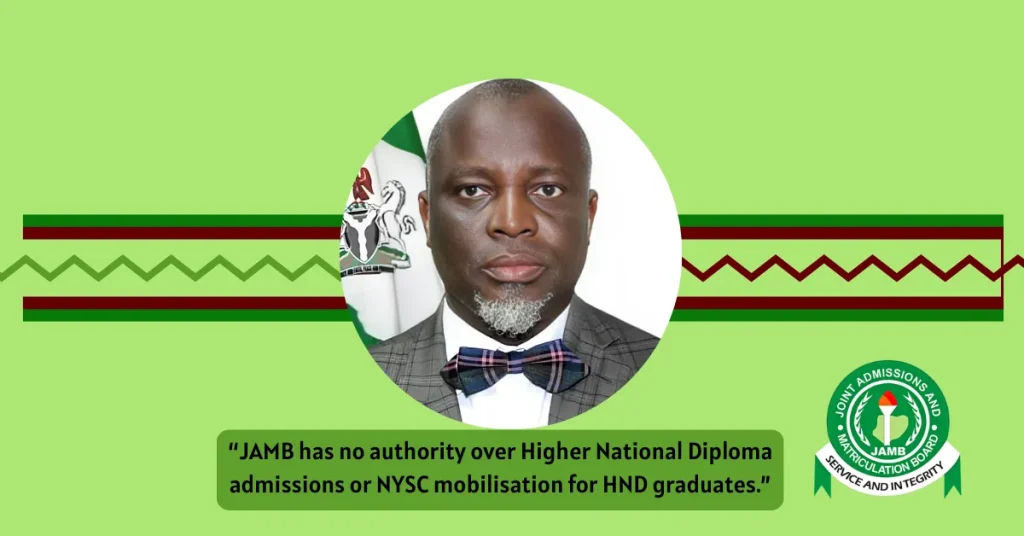
One Nigerian polytechnic is reportedly responsible for over 42,000 irregular admission cases, a staggering figure disclosed by the Joint Admissions and Matriculation Board Registrar, Prof. Ishaq Oloyede, during a meeting with polytechnic student leaders.
The revelation came as Prof. Oloyede clarified JAMB’s role in admissions and addressed mounting complaints from Higher National Diploma graduates who have been unable to participate in the National Youth Service Corps scheme due to admission irregularities at their institutions.
The meeting with the leadership of the National Association of Polytechnic Students, led by Comrade Eshofune Paul Oghayan, was detailed in a bulletin released by JAMB on Monday and signed by its Public Communication Advisor, Fabian Benjamin.
Prof. Oloyede stated that JAMB’s mandate is limited to conducting examinations and processing admissions for first degree, National Diploma and Nigerian Certificate in Education programmes. The board, he emphasised, has no authority over Higher National Diploma admissions or NYSC mobilisation for HND graduates.
“The Board is not responsible for admitting HND students into polytechnics and, therefore, has no data to facilitate their entry into the NYSC scheme,” he said, directing affected students to take their complaints to the institutions and regulatory bodies responsible for HND admissions.
The Registrar explained that problems arise when polytechnics bypass JAMB’s Central Admissions Processing System and admit students through irregular channels. CAPS, he noted, automates admissions, ensures transparency, prevents multiple admissions and provides candidates with accurate information about institutions and programmes.
He issued a firm warning that any admission conducted outside CAPS is null and void.
Prof. Oloyede revealed that some polytechnics admit more National Diploma students than permitted by the National Board for Technical Education, creating discrepancies that haunt graduates when they pursue HND programmes, especially at different institutions.
He criticised what he described as exploitative “Daily Part Time” HND programmes, noting that the NYSC frequently rejects graduates of such unconventional arrangements, leaving them unable to serve.
Many HND graduates, particularly those who completed their National Diploma through part time or non regular pathways before enrolling in full time HND programmes, have encountered NYSC mobilisation barriers. NYSC participation typically requires full time study for the highest qualification obtained, and admission irregularities often result in rejection or exemption certificates instead of mobilisation.
The disclosure of 42,000 irregular admissions at a single polytechnic underscores the scale of non compliance with established admission procedures and highlights the consequences students face when institutions fail to follow due process.
“Some polytechnics have conducted illegal admissions, with one institution reportedly having over 42,000 irregular cases,” Prof. Oloyede stated. “If institutions follow the proper process, there would be no problem. On our part, we will continue to render quality service beneficial to all stakeholders. Let’s do things properly.”
The revelation serves as a stark reminder that while JAMB has put systems in place to ensure orderly and transparent admissions, institutional compliance remains critical to protecting students from future complications that could derail their careers and prevent them from fulfilling national service obligations.
Last Updated on March 11, 2026 by Ola Funmilayo

With over a decade of experience in education journalism, JAMB-GOV.ORG has become a trusted voice in providing relevant and comprehensive JAMB news reporting that matter most to students and educators nationwide.


